Introduction
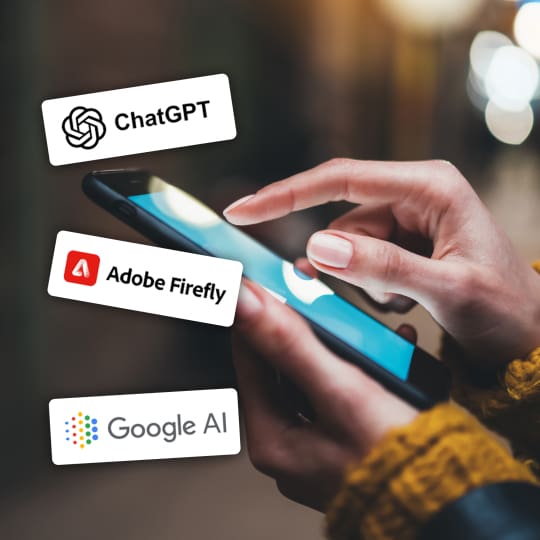
AI is growing exponentially and is fast becoming a part of our everyday lives. It can become tempting to use it for everything, especially when it comes to our businesses and working life. When it comes to brands, AI is having an influence on how they can create content, engage customers and marketing strategy. However, caution needs to be exercised when it comes to using AI content to enhance your brand. Consumers are becoming savvier to identifying AI content, and you run the risk of your content and messaging becoming bland, generic, or inauthentic.
As Digital Marketing experts, Blue Bee have been hard at work researching the use of AI, and how it effects marketing and branding. Below are our tips and advice on how to keep your brand authentic in the age of AI.
Authenticity Is More Important Than Ever
As the world gets more used to AI, authenticity is becoming more powerful. Making sure that your brand has an established mission, tone of voice, aesthetic identity and target audience is crucial before you consider using AI. Without having these principles in place, AI will generate content that is inconsistent, off-brand, or emotionless. AI can only amplify and adapt what already exists, so having a poorly defined brand identity and message will lead to inconsistency.
One thing that AI isn’t good at is storytelling and building genuine human connections. Getting to the heart of your brands story and its history is the best way to build trust and emotional resonance with your audience and the only way to do this effectively is when it is shaped by humans.
AI Should Amplify Brand Identity, Not Replace It
Once you have an established brand voice, messaging and identity then this is where you can start utilising AI to amplify your brand. Ultimately, you want to use AI to free up time for the humans to do the creative work.
Ai is particularly good at things like generating insights, analysing data, offering suggestions and identifying trends and preferences. This means you should use it to shape and enhance your content and branding, but not to generate it. Relying on AI to generate content can result in inconsistent tone, inaccuracies and even lead to ethical and legal issues.
Human oversight is essential. Every piece of AI-assisted content should be reviewed, refined, and checked for brand alignment. Think of AI as a research assistant – not your copywriter, designer, or strategist.
Human Touchpoints Must Be Preserved
The world of automation has become so much a part of day-to-day life that we no half expect to speak to a machine or chat-bot when we contact a brand, but human interaction still matters. Certain customer moments simply can’t be handled by AI – for example, complaint handling, complex enquiries, sensitive topics or anything requiring empathy.
Reducing human involvement entirely creates a cold, disconnected experience. Brands risk becoming what many experts now call “zombie brands”: alive online but completely lacking soul. So, AI should be used instead, to support you in handling those repetitive and time-consuming tasks, while keeping the more valuable interactions human based. Genuine human presence builds trust, reassurance and loyalty – something AI will never replicate.
AI-Driven Threats – And Why Honesty & Transparency Matter
As AI evolves and grows, so do the risks associated with it. It can throw up a number of potential issues that can be damaging to your brand;
- Deepfakes impersonating real staff or brand representatives
- AI-generated phishing and fraud
- Highly realistic counterfeit products
- Misinformation spreading at speed
- Employees unintentionally leaking confidential information into public AI tools
- Loss of brand voice through over-automation
Because of these risks, transparency is vital. Customers want to know how their data is used, what AI tools are involved, and where the human oversight sits. Being open and honest about your AI practices builds trust and shows your audience that you use AI responsibly.
Internally, it’s also important to set clear guidelines on how AI is used within your business. Whether it’s what information can be input into AI tools, who is allowed to use them, or what approval steps are needed, having a framework helps protect both your brand identity and your data.
Keep the UGC coming
User-generated content (UGC) remains one of the strongest signals of authenticity. Reviews, photos, testimonials, shared experiences and real stories provide proof that your brand connects with real people – something AI can never simulate convincingly.
Brands should actively encourage customers and clients to share their stories, experiences and feedback. This not only reinforces brand trust, but also balances out the more structured, AI-supported content you may be producing behind the scenes.
It also goes a long way to helping you appear more in AI searches and overviews, as detailed in our previous blog Local SEO in 2026.
Conclusion
AI presents some great opportunities for brands to enhance productivity, personalise content, and uncover insights that were previously out of reach or took up to much time and manpower. However, AI should only ever enhance your brand – not define it. Your brand must be well-established, clearly documented and fully understood before you allow AI to play a role in shaping your messaging.
Even then, AI must be monitored very closely, quality-checked and used responsibly. The brands that will thrive in the future are those that use AI to amplify their human strengths – not replace them. Authenticity will always be the difference maker, and in an age where content is easier than ever to produce, the brands that stay truly human will be the ones that stand out.
If you feel your brand could be stronger, clearer, or better defined before exploring AI-driven tools, our team at Blue Bee can help. We offer full branding services — from brand identity development to tone of voice and messaging — to ensure your foundations are solid. Get in touch to find out how we can help